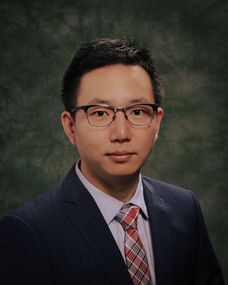
Haifeng Wang
Associate Professor, Co-Graduate Coordinator
McCain Hall, Room 260P
Department of Industrial and Systems Engineering
Bagley College of Engineering, Mississippi State University (MSU)
PO Box 9542, Mississippi State, MS 39762
✉: wang [at] ise.msstate.edu
☎: (662) 325 3923
See also: Google Scholar, ResearchGate, Linkedin, MSU Profile
My research studies machine learning and optimization methods for addressing challenges of high data heterogeneity and model interpretability in complex engineering problems, such as medical image-based diseases analysis, neurological disorder diagnosis, precision agriculture, smart electronics manufacturing, smart warehouse, and other big data applications. I am particularly interested in understanding the algorithmic and statistical properties of machine learning models through both empirical (data-driven methods to develop tools for solving practical problems) and methodological (optimization theories to advance our understanding of machine learning fundamentals) studies.
Recently, my work is focused on 1) developing interpretable machine learning tools to understand extracapsular extension in head and neck cancer treatment, 2) transfer learning and domain adaptation in woodchip quality evaluation, and 3) pattern recognition from multi-channel multi-modal biometric signals.
I joined MSU Industrial and Systems Engineering department as an Assistant Professor (2019.08–2025.08) and have been serving as an Associate Professor since 2025.08. I am also an affiliated faculty at the Center for Advanced Vehicular Systems (CAVS) and University of Mississippi Medical Center (UMMC) Department of Radiation Oncology.
I obtained my Ph.D. and M.S. in Industrial and Systems Engineering from the State University of New York at Binghamton in 2019 and 2015, respectively, as advised by Dr. Sang Won Yoon.
I also hold a B.S. degree in Industrial Engineering from Southeast University in Nanjing, China.
From 2014 to 2019, I was a research associate working on the following research projects sponsored by different industry partners under the Integrated Electronics Engineering Center (IEEC) and Watson Institute of Systems Excellence (WISE) at Binghamton University:
- 2017-2019, Koh Young Technology Inc., worked on KSMART: A Smart Factory Solution in Electronics Manufacturing.
- 2016, Koh Young Technology Inc., worked on Machine Learning-Based Pathological Tissue Detection.
- 2014-2016, Innovation Associates (iA), worked on Large-scale Mail Order Pharmacy Warehouse Simulation and Optimization.
[third person bio]
☑ Research Area
- Machine Learning
Methods: machine learning modeling and optimization with high data heterogeneity, image-based machine learning model interpretability, information fusion, ensemble learning
Applications: medical image-based cancer diagnosis and treatment planning, smart agriculture, advanced manufacturing, surface mount technology, virtual reality-integrated intelligence, anomaly event detection - Optimization Algorithms
Methods: first-order methods, large-scale optimization, nonlinear programming, mixed-integer programming, Bayesian optimization, meta-heuristics, multi-objective evolutionary algorithms
Applications: optimization of complex engineering systems (warehouse, supply chain, healthcare), optimization in machine learning - Network Science
Methods: community detection, network dynamics, deep graph neural networks
Applications: human brain functional connectivity pattern analysis for brain disorder diagnosis, attention deficit hyperactivity disorder (ADHD) diagnosis, spatial-temporal graph
📰 News
2024
2023
See More
2022
2021
2020
2019
☑ Lab Members
- Munirul Alam (Ph.D. Student, 2026 January -)
- Dongmin Kang (Ph.D. Student, 2025 August -)
- Abhro Shome Pias (Ph.D. Student, 2025 January -)
- Amirhossein Eskorouchi (Ph.D. Student, 2024 January -)
- Mohamad Dehghan Bonari (Ph.D. Student, 2024 August -) (co-advise with M. Marufuzzaman)
- Donald Oji (Ph.D. Student, 2025 August -)
- Terrence Dorcoo (Ph.D. Student, 2025 August -)
- Aravind Subramanian (Ph.D. Student, 2025 August -)
- Ahmed Abdulkareem (Ph.D. Student, 2024 December -)
- Joseph Sill (Ph.D. Student, 2024 August -)
- Nour Zargayoun (Ph.D. Student, 2022 December -)
- Julius Phillips (Ph.D. Student, 2021 August -)
- Jolly Ehiabhi(Ph.D. Student, 2021 January -)
- Jacob Lindsey, Undergraduate research assistant (2025.08- 12) Topic: Biometric Signal Processing (enter graduate school at MSU)
- Niraj Ghimire, Undergraduate research assistant (2025.05- 2026.05) Topic: AI-Doctor Collaborative Software Development (secure a Software Developer Fall Co-Op 2026 position at IBM)
Former Members
- Michael Carter, Ph.D. 2025, "LeCun-PSO Hybrid Initialization of Neural Network using Asymmetric Gait Features for Classification of Parkinson’s Disease, " committee chair.
- Abdur Rahman, Ph.D. 2025,"Neural Architecture Search-Driven Unsupervised Domain Adaptation for Enhanced Wood Chip Quality Evaluation in Forest Industries, " committee chair. 1st position: Assistant Professor at Louisiana Tech University
- Manideep Kolla, MS 2025, "SoyNASNet: An Optimized Neural Architecture for Soybean Leaf Disease Detection"
- Yibin Wang, Ph.D. 2023, "Distributionally Robust Unsupervised Domain Adaptation and Its Applications in 2D and 3D Image Analysis, " committee chair. 1st position: PostDoc at Michigan State University
- Wesley Chorney, Ph.D. 2023, "Vertical Federated Learning using Autoencoders with Applications in Electrocardiograms, " committee chair. 1st position: pursue a medical degree in Ireland
- Fatine Elakramine, Ph.D. 2023, "Developing systems engineering and machine learning frameworks for the improvement of aviation maintenance," co-Chair with M. Marufuzzaman.
- Zachariah Douglas, MS 2022, "Improving deep neural network training with batch size and learning rate optimization for head and neck tumor segmentation on 2D and 3D medical images, " committee chair. 1st position: Apprentice Engineer - Data Science/Machine Learning at LinkedIn
- Asahi Lama Sherpa, Undergraduate Research Assistant (2024.08- 2025. 08) Topic: Biometric Signal Processing
- Kevin Ho, Undergraduate Research Assistant (2024.08- 2025.01) Topic: AI-Doctor Collaborative Software Development
- Swarup Bhattarai, Undergraduate research assistant (2024.02-05) Topic: AI-Doctor Collaborative Software Development
- Niraj Ghimire, Undergraduate research assistant (2023.10- 2024.08) Topic: Multivariate time series analysis
- Meng Chen, Undergraduate Research Assistant (2021.10- 2023.05) Topic: Embedded system development
- Ethan Kang, Undergraduate Research Assistant (2023.01- 05) Topic: Biometric signal processing (enter graduate school at MSU)
- Darnell Nunn, Undergraduate Research Assistant (2022.04- 2022.12) Topic: Embedded system analysis
- Jinhee Yu, Undergraduate Research Assistant (2021.06- 2022.09) Topic: Speech emotion recognition (enter graduate school at MSU)
- Rakeen Zaman, Undergraduate Research Assistant (2021.05- 2021.07). Topic: Data visualizations
- Timothy Wunrow, Undergraduate Research Assistant (2020.08- 2021.05). Topic: Anomaly detection
- Sunny Gurung, Undergraduate Research Assistant (2020.08- 2021.05). Topic: Hyperspectral image correction
Current Members
☑ Publications
See also my Google Scholar profile.-
W. Chorney*, A. Rahman*, Y. Wang*, H. Wang, and Z. Peng
Federated learning for heterogeneous multi-site crop disease diagnosis
Mathematics, 13, 2025.
(Impact Factor: 2.4 (2025))
-
A. Rahman*, J. Street, J. Wooten, M. Marufuzzaman, V. Gude, R. Buchanan, and H. Wang
MoistNet: Machine vision-based deep learning models for wood chip moisture content measurement
Expert Systems with Applications, 259, 2025.
(Impact Factor: 7.5 (2025))
-
A. Rahman*, J. Street, J. Wooten, M. Marufuzzaman, V. Gude, R. Buchanan, and H. Wang
MoistNet: Machine vision-based deep learning models for wood chip moisture content measurement
Expert Systems with Applications, 259, 2025.
(Impact Factor: 7.5 (2025))
-
A. Rahman*, L. He, and H. Wang
Activation function optimization scheme for image classification
Knowledge-Based Systems, 305, 2024.
(Impact Factor: 7.2 (2025))
-
A. Rahman*, M. Marufuzzaman, J. Street, J. Wooten, V. Gude, R. Buchanan, and H. Wang
A comprehensive review on wood chip moisture content assessment and prediction
Renewable and Sustainable Energy Reviews, 189, 2024.
(Impact Factor: 15.9 (2023))
-
Y. Wang*, and H. Wang
Distributionally robust unsupervised domain adaptation
Journal of Computational and Applied Mathematics, 436, 2024.
(Impact Factor: 2.4 (2023))
-
W. Chorney*, H. Wang, L. He, S. Lee, and LW Fan
Convolutional block attention autoencoder for denoising electrocardiograms
Biomedical Signal Processing and Control, 86, 2023.
(Impact Factor: 5.1 (2023))
-
Y. Lu, S. Young, and H. Wang
Robust plant segmentation of color images based on image contrast optimization
Computers and Electronics in Agriculture, 193, 2022.
(Impact Factor: 5.65 (2020))
-
Y. Wang*, H. Wang, and Z. Peng
Rice diseases detection and classification using attention based neural network
Expert Systems with Applications, 178, 2021.
(Impact Factor: 6.95 (2020))
-
H. Wang, S. Alelaumi, H. Lu, and S. W. Yoon
A wavelet-based multi-dimensional temporal recurrent neural network for stencil printing performance prediction
Robotics and Computer Integrated Manufacturing, 71, 2021.
(Impact Factor: 5.66 (2020))
- Y. Wang*, W. Duggar, T. Thomas, P. Robert, L. Bian, and H. Wang
Extracapsular extension identification for head and neck cancer using multi-scale 3D deep neural network
Proceedings of the 2021 ACM Conference on Bioinformatics, Computational Biology, and Health Informatics (ACM BCB), 2021.
(Acceptance rate: 30%)
-
H. Wang, D. Won, and S.W. Yoon
An adaptive neural architecture optimization model for medical image analysis
Applied Soft Computing, 111, 2021.
(Impact Factor: 6.72 (2020))
-
Y. Wang*, C. Zamiela, T. Thomas,W. Duggar, P. Robert, L. Bian, and H. Wang
3D texture features-based lymph node automated detection in head and neck cancer analysis
Proceedings of the 2020 IEEE International Conference on Bioinformatics and Biomedicine (IEEE BIBM), 2020.
(Acceptance rate: 19%)
-
H. Pirim, M. Fan, and H.Wang
Brain functional connectivity pattern recognition for attention-deficit/ hyperactivity disorder diagnosis
Proceedings of the 2020 IEEE International Conference on Bioinformatics and Biomedicine (IEEE BIBM), 2020.
(Acceptance rate: 19%)
- Y. Wang, and H. Wang
Unsupervised domain adaptation for cell detection on SRS images
Proceedings of the 2020 IISE Annual Conference, 2020.
(Best student paper finalist. Acceptance rate: 9%) [Poster]
-
Q. Zhang, H. Wang, and S. Yoon
A 1-norm linear programming nonparallel hyperplane support vector machine for pattern classification
Neurocomputing, 376 (1), 2020
(Impact Factor: 5.719 (2020))
- H. Dauod, D.MSerhan, H.Wang, N. Khader, S.W. Yoon, and K. Srihari
Robust optimization and receding horizon control strategy to enhance replenishment planning of pharmacy robotic dispensing systems
Robotics and Computer Integrated Manufacturing, 59, 2019.
(Impact Factor: 5.66 (2020))
-
H. Lu, H. Wang, Q. Zhang, D. Won, and S. Yoon
A dual-tree complex wavelet transform based convolutional neural network for human thyroid OCT image segmentation
Proceedings of the 6th IEEE International Conference on Healthcare Informatics (IEEE ICHI), 2018.
(Acceptance rate: 28%)
-
Q. Zhang, H. Wang, H. Lu, D. Won, and S. Yoon
Medical image synthesis with generative adversarial networks for tissue recognition
Proceedings of the 6th IEEE International Conference on Healthcare Informatics (IEEE ICHI), 2018.
(Acceptance rate: 28%)
- H. Wang, B Zheng, SW Yoon, and HS Ko
A support vector machine-based ensemble algorithm for breast cancer diagnosis
European Journal of Operational Research (EJOR), 267(2), 2018.
(Impact Factor: 5.33 (2020))
- H. Wang, H. Dauod, N. Khader, S. Yoon, and K. Srihari
Multi-objective planogram optimization using association rule mining and evolutionary algorithms for robotic dispensing system
International Journal of Computer Integrated Manufacturing, 31 (8), 2018.
(Impact Factor: 3.20 (2020))
Selected Presentation and Peer Reviewed Abstracts:
- Y. Wang*, H. Wang, H. Pirim, Z. Chen, L. Fan, and N. Ojeda
Attention deficit/hyperactivity disorder (ADHD) diagnosis using diffusion convolutional recurrent neural networks with temporal data
Mississippi Academy of Sciences 86th Annual Meeting, 2022.
[Poster]
- H. Pirim, H. Wang, and M. Fan
Dynamic Network Connectivity Analysis for Understanding Attention Deficit Hyperactivity Disorder
Networks in Biology and Medicine Conference, 2021.
- Y. Wang*, W. Duggar, P. Robert, T. Thomas, R. Gatewood, L. Bian, and H. Wang
Interpretable artificial intelligence-based extracapsular extension prediction in head and neck cancer analysis
American Association of Physicists in Medicine 63rd Annual Meeting, 2021.
[Poster]
- Y. Wang*, W. Duggar, P. Robert, T. Thomas, R. Gatewood, L. Bian, and H. Wang
Automatic extracapsular extension identification for head and neck cancer using deep neural network with local-global information
International Journal of Radiation Oncology*Biology*Physics, 111(3), 2021.
- Y.Wang*, T. Thomas,W. Duggar, P. Robert, L. Bian, and H.Wang
Artificial intelligence-based extracapsular extension prediction in head and neck cancer analysis
Clinical Cancer Research, 27, 2021.
[Poster]
Selected Publications:
☑ Grants/Projects*
*E: External; F: Federal; S: State; I: Internal- (E-F) USDA NIFA Sun Grant (2026.04-2026.09): Role: PI, "Design and Field Validation of a Portable Edge-AI System for Forest Biomass Quality Assessment," $60,000
- (E-S) Mississippi's Institutions of Higher Learning (2026-2027): Role: PI, "Validating an Artificial Intelligence Powered Multimodal Sensing and Data Collection Platform for Plant Health Management," $85,000
- (E-F) NSF (2025-2028): Role: Co-PI, "MRI: Track 1 Development of Machine-Learning Assisted Continuous Fiber Deposition for Multi-Material Additive Manufacturing," $582,289
- (E-F) USDA-NIFA (2025-2028): Role: Co-PI, "Developing an Automated Preparation Technology for Skewering Operations in Meat and Seafood Kebab Production," $611,000
- (E-F) USDA-NIFA (2025-2027): Role: Co-PI, "Enhancing Forest Product Curricula in AI via Experiential Learning," $150,000
- (E-S) Mississippi Soybean Promotion Board (2025-2026): Role: Co-PI, "Developing an Intelligent Real-Time Monitoring Platform for Rapid Diagnosis of Soybean Diseases II," $47,543
- (E-F) USDA-NIFA (2024-2029): Role: Co-PI, "AI2F: Research and Extension Experiences for Undergraduates (REEU) in AI-enabled Industrial Solutions for Forest Products," $750,000
- (E-S) Mississippi Soybean Promotion Board (2024-2025): Role: Co-PI, "Developing an Intelligent Real-Time Monitoring Platform for Rapid Diagnosis of Soybean Diseases I," $43,739
- (E-F) NIH-R03 (2023-2025): Role: PI, "Optimization and Validation of a Cost-effective Image-Guided Automated Extracapsular Extension Detection Framework through Interpretable Machine Learning in Head and Neck Cancer," $307,358
- (E-F) USDA-NIFA (2022-2025): Role: Co-PI, "Image-Based Assessment of Woodchip Qualities: Transfer Learning Model Development to Field Validation" $590,005
- (E-S) Mississippi Department of Employment Security (MDES) (2020-2022): Role: Co-PI, "Leveraging Immersive Virtual Reality Technology to Perform Nurse Training in the State of Mississippi," $156,196
- (I) Mississippi State University, ORED, Advancing Collaborative Research Program (2025-2027)
- (I) Mississippi State University, ORED, Undergraduate Research Support Program (2020-2021; 2021-2022; 2023-2025; 2025-2026)
- (I) MSU-MAFES Special Research Initiative (2022-2023)
- (I) Mississippi State University, Strategic Research Initiative (SRI) Faculty Seed Funding Program Track I, College of Arts & Sciences (2021)









☑ Teaching
- IE 8743: Nonlinear Programming
Previous versions: Spring 2021, Fall 2023, Spring 2026
This course introduces the fundamentals of nonlinear programming theory and its applications with a focus on understanding the convexity and convex optimization theory. The course includes convex theory, unconstrained optimization, gradient methods, line search methods, theory of constrained optimization, KKT Conditions, Lagrangian duality, and support vector machine.
- IE 4683/6683: Machine Learning with Industrial Engineering Applications
Previous versions: Spring 2022, Fall 2024, Spring 2026
This course is an entry-level machine learning course with an emphasis on the basic approaches of machine learning and the coding. The topics include the foundation of Python computational tools, data preprocessing, data descriptive analysis, regression, classification, and model evaluation.
- IE 4933/6933: Information System for Industrial Engineering (Fall 2025)
Previous versions: Fall 2022, Spring 2023
This course provides an introduction to computer-based information systems. The course focuses on Excel and Access with topics including Excel functions, Access, Pivot Tables/Charts (Grouping, Sorting, and Filtering), and Relational Database Management System (RDBMS) (Queries, Tables, Forms), and Power BI.
- IE 8703: Optimization in Deep Learning
Previous versions: Spring 2025
This course provides an introduction to deep neural networks and related optimization algorithms with an emphasis on developing intuitions for understanding how to optimize computationally intensive machine learning models. The course will include: bias–variance tradeoff, backpropagation, convolutional neural networks, recurrent neural networks, gradient methods (gradient descent, subgradient, stohastic gradient, accelerated gradient, projected gradient), convergence analysis, loss landscape, proximal gradient methods, and mirror descent.
- IE 2990: Fundamentals and Engineering Applications of Programming with Python
Previous versions: Spring 2024, Spring 2025
An introduction to Python programming for use in engineering applications.
- IE 4613/6613: Engineering Statistics I
Previous versions: Winter 2022, Spring 2023, Spring 2024
Introduction to statistical analysis. Topics include probability, probability distributions, data analysis, parameter estimation, statistical intervals, and statistical inferences.
- IE 8990: Large-Scale Optimization for Deep Learning
Previous versions: Spring 2022
This course provides an introduction to deep neural networks and related optimization algorithms with an emphasis on developing intuitions for understanding how to optimize computationally intensive machine learning models. The course will include: bias–variance tradeoff, backpropagation, convolutional neural networks, recurrent neural networks, gradient methods (gradient descent, subgradient, stohastic gradient, accelerated gradient, projected gradient), convergence analysis, loss landscape, proximal gradient methods, and mirror descent.
- IE 4934/6934: Information System for Industrial Engineering
Previous versions: Fall 2021, Fall 2020, Spring 2020, Fall 2019
This course provides an introduction to computer-based information systems. The course focuses on Excel and Access with topics including Excel functions, Visual Basic for Applications (VBA) fundamentals (Procedures, Functions, IF, Loop, Forms), Pivot Tables/Charts (Grouping, Sorting, and Filtering), and Relational Database Management System (RDBMS) (Queries, Tables, Forms).
- Directed Individual Study Courses
- Fall 2022: Advanced Machine Learning in Radiotherapy
- Fall 2022: Interpretable Machine Learning
- Spring 2022: Advances in Domain Adaptation Theory
Binghamton University
- SSIE 650: Systems Optimization (Teaching Assistant, Spring 2019)
This course provides a broad spectrum of models and methods for systems optimization. The course includes motivating examples; classical constrained and unconstrained methods; search techniques; linear programming; network and transportation systems; introduction to integer programming.
Mississippi State University
☑ Services
Professional events:- 2025-present: Guest Editor, IISE Transactions on Healthcare Systems Engineering, Special Issue ``Recent Advances of Artificial Intelligence Innovations in Health Systems Engineering."
- 2024-present: Director, QCRE Division, IISE.
- 2020-present: Academic Committee Member, Society for Health Systems.
- 2023-2025: Guest Editor, Mathematics Journal, Special Issue ``Computational Intelligence in Addressing Data Heterogeneity."
- 2023-2025: Guest Editor, Information Journal, Special Issue ``From Data to Diagnosis: Recent Advances of Machine Learning in Biomedical and Health Informatics."
- 2024-2026: Vice-chair, Academic and Student Committee, Society for Health Systems.
- 2023: Program and Organizing Committee, The 39th Southern Biomedical Engineering Conference (SBEC).
- 2023: Competition Chair, 2023 IISE Student Data Analytics Competition in the DAIS Division.
- 2023: Competition Chair, 2023 IISE Best Track Paper Competition in the DAIS Division.
- 2022: Co-chair for the Health Systems Track, 2022 IISE Annual Conference.
- 2021-2023: Director, DAIS Division, IISE.
- 2022: Competition Chair, 2022 IISE Student Data Analytics Competition in the DAIS Division.
- 2022: Competition Chair, 2022 IISE Best Student Paper Competition in the DAIS (Data Analytics and Information Systems) Division.
- 2021: Panelist of IISE DAIS Academic Job Search panel.
- 2020-2022: Chair, Healthcare Systems Research Working Group, MSU.
- 2019: Panelist of INFORMS Academic Job Search panel - MC92, Seattle, WA.
- 2025: IISE Annual Conference
- 2024: IISE Annual Conference, The Southern Biomedical Engineering Conference (SBEC)
- 2023: IISE Annual Conference, INFORMS Annual Conference, The Southern Biomedical Engineering Conference (SBEC)
- 2022: IISE Annual Conference, ICCMAE 2022: The Second International Conference on Computational Methods and Applications in Engineering
- 2021: INFORMS Annual Conference
- 2020: IISE Annual Conference
- 2018: FAIM Conference
- 2017: IISE Annual Conference
- 2015: IISE Annual Conference
-
IEEE Transactions on Neural Networks and Learning Systems;
Information Sciences;
SIAM Review;
Expert Systems With Applications;
Information Systems;
Annals of Operations Research;
Journal of Imaging;
Symmetry;
Cancers;
Operations Research Forum;
Artificial Intelligence Review;
Soft Computing;
Computers and Operations Research.
☑ GoodReads
- Reading: Research 101 for Engineers.
- Reading: Writing An Academic Biography.
- Tutorial: Deep Implicit Layers.
- Tutorial: Optimization Cheat Sheet from Prof. Pokutta.
- Tutorial: Robust Optimization from Prof. Aharon Ben-Tal.
- Tutorial: Making a technical poster.
- Seminars: Online Seminar on Mathematical Foundations of Data Science.
- Seminars: Simons Institute.
- Course: Dimitri P. Bertsekas Reinforcement Learning Course.
- National Weather Digital Forecast Database.